A 20-year-old man from Eritrea is nursing serious leg wounds after being shot twice by people he says were Eritrean soldiers stationed near the border with Ethiopia.
“Even after I fell down, I could hear the bullets whizzing past me,” Weldab tells me from a clinic bed in Mai-Aini refugee camp in Ethiopia.
“I was lucky that I escaped. There were 10 of us in total; I don’t know what happened to the rest of my friends.”
This was the young man’s second attempt to leave his homeland.
He walked for most of the journey. Many of the refugees I met walked, mostly at night to avoid being detected.
Some told me they paid traffickers between $100 and $700 (£65 and £450) to show them the way.
Others said that relatives in Europe have been known to pay the traffickers directly.
They would be taken by car part of the way and then shown the “safest” route by foot.
Although there is no war or famine in Eritrea, it accounts for the second largest number of asylum-seekers arriving in Europe, after Syria.
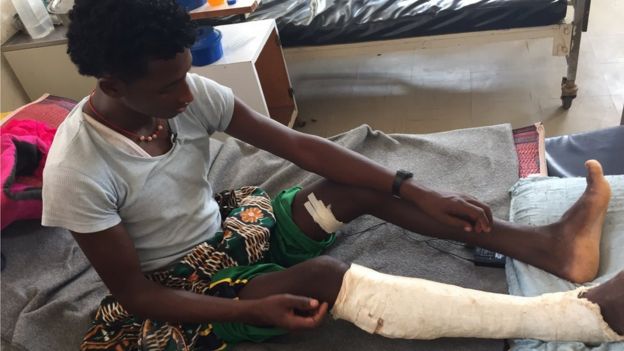
Weldab, who did not want to give his full name, had paid a fee to go to Europe the first time he tried to flee.
But it went wrong at the border with Sudan, when he was arrested on the Eritrean side and spent three weeks in police cells.
He told me that back home he only dreamt of two things: Playing football and going abroad – because he wants to avoid being conscripted into the army.
The UN has witnessed a huge rise in the number of people crossing from Eritrea into Ethiopia in May and June.
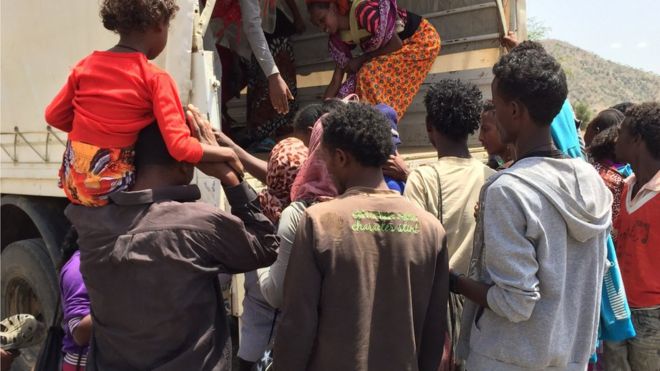
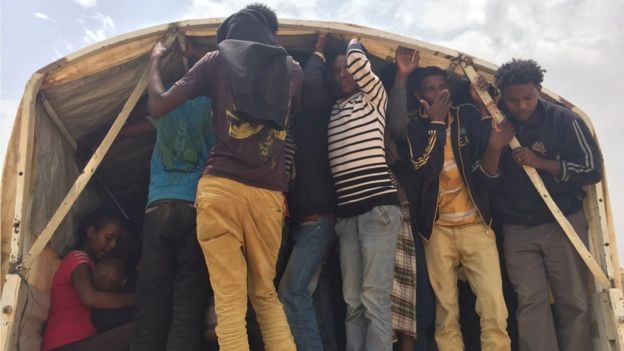
In just two days I saw nearly 500 refugees coming through dozens of illegal routes on the heavily guarded border.
Like Weldab, most are young people wanting to avoid conscription, which is compulsory after finishing school for both men and women.
It is supposed to last two years, but if not picked to continue their studies after this time – people can be forced to stay in the army until their 40s.
Many of the refugees are women, some carrying babies on their backs.

Eritrea – key facts

In one of the Ethiopian military camps that we visited, a section had been turned into a temporary shelter for those arriving.
Women and babies shared a few mattresses laid down on the floor of a structure made from wood and corrugated iron.
Outside in the scorching sun, more women sat in groups under the shades of trees.
Army deserter
Some young men covered their faces with their clothes and hands as we approached them, too afraid to be filmed.
“They won’t talk to you,” one elderly woman carrying a baby told me through an interpreter. “They are all scared.”
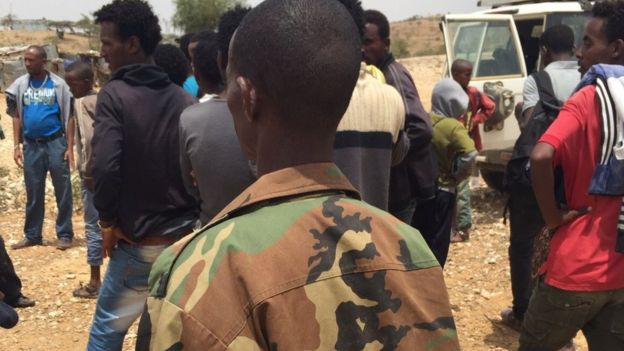
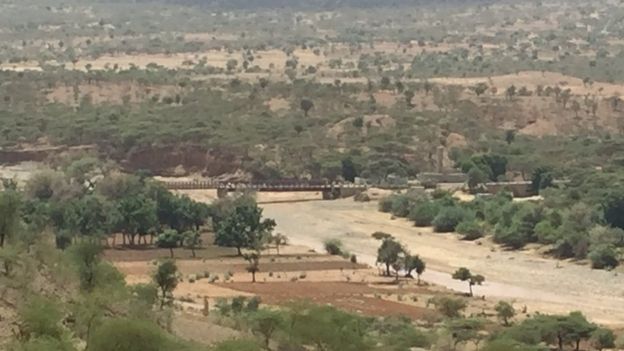
Sitting next to the woman was a man in military camouflage, who said he had deserted the army after he was not allowed to leave despite being diagnosed with a serious ear problem.
“How could I continue serving under such pain?”
He left his wife and seven children behind and walked to the border with his gun; it took him just a day because he knew the area well.
“It is a tough choice as I don’t know if I will ever see them again. But I know they will understand; it was a matter of life or death. At least here, they will know I am safe and alive.”
He joins more than 150,000 Eritrean refugees living in Ethio
